




How to Choose the Right Fishing Rod Guides? Materials, Models, and Performance Impact
The guides are an essential component of our fishing rod, yet they are often considered last by anglers when making a purchase. Rod builders, who are more knowledgeable and precise on the subject, pay greater attention to them during the design of their tool. However, for many, there are still numerous questions remaining.

Rédigé par Blog Rodhouse
Le 24 Dec 2024
How to Choose the Right Fishing Rod Guides? Materials, Models, and Performance Impact
While the blank is the core element of your fishing rod, the guides play a crucial role in optimizing its performance. Their number, size, and composition directly affect casting, sensitivity, and durability. Learn how to make the right choices to enhance your setup.

Main Functions of Rod Guides
The guides serve multiple purposes, influencing all aspects of fishing:
- Casting performance: Guide spacing and size help control line flow, preventing tangles and improving both casting accuracy and distance.
- Line feedback: More guides mean more contact points, enhancing sensitivity and detecting subtle bites.
- Load distribution: A well-balanced guide train ensures a smooth bend in the blank, preventing weak points.

Guide Components: Two Key Parts
Rod guides are made up of two essential elements:
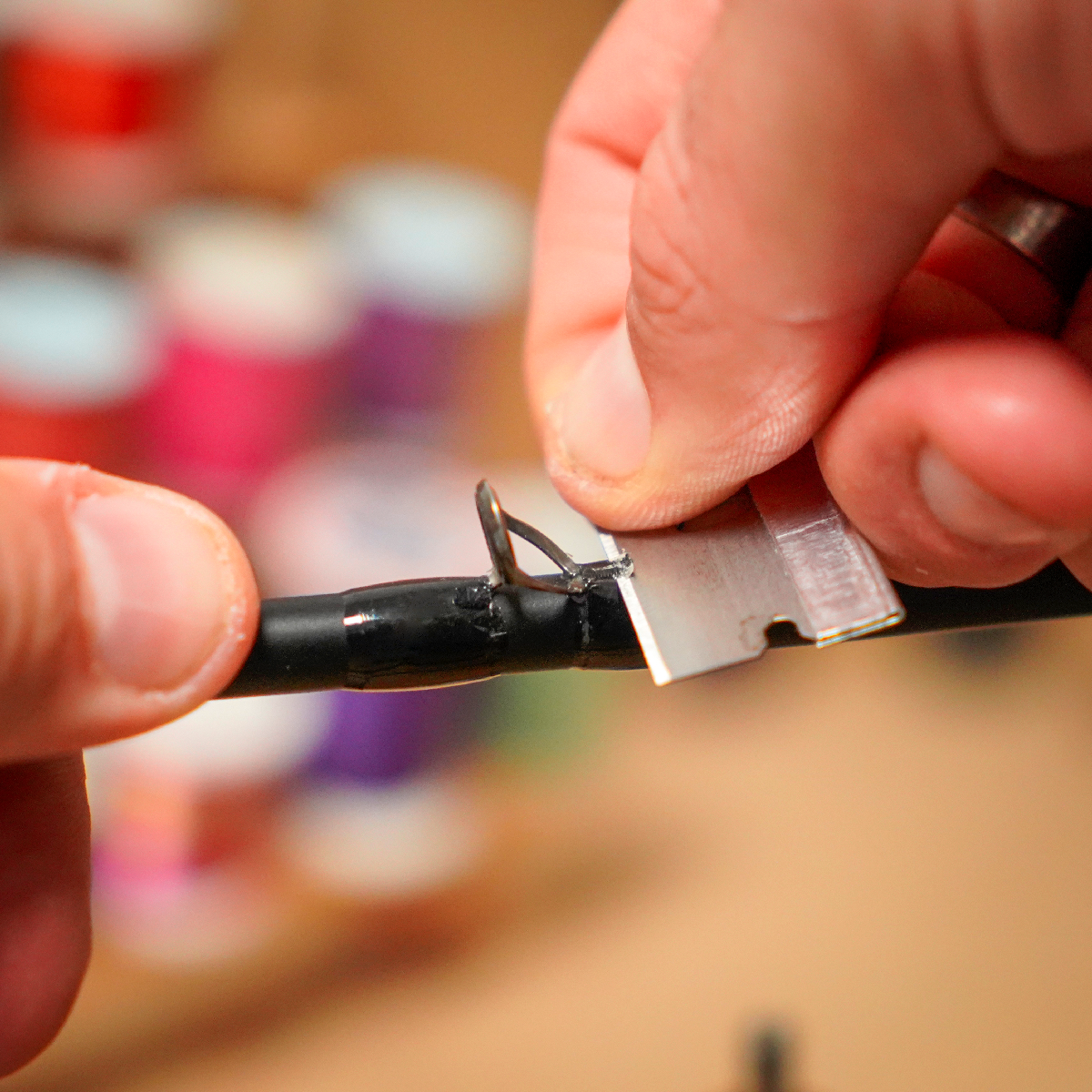
- The ring insert: This is the circular component where the line passes through. It is available in Alconite, SIC (Silicon Carbide), and Torzite, each offering differences in weight, abrasion resistance, and smoothness.
- The frame: This part holds the insert and connects to the blank. It helps distribute force and transmits vibrations. The three primary materials are stainless steel, titanium, and carbon, each with unique properties in weight, durability, and rigidity.

Types of Rod Guides
Rod guides vary in materials and shapes, which impact their application:
- Common combinations: Stainless steel with Alconite or SIC, titanium with SIC or Torzite, carbon with Zirconium.
- Design variations: Single-foot guides for lightness, double-foot for balance, and triple-foot for high-strength applications.

Weight Considerations
Guide weight directly affects rod action and sensitivity:
- Lighter guides improve frequency, resonance, and responsiveness.
- A steel/Alconite guide train is 70% heavier than a titanium/Torzite setup, significantly affecting longer rods.
- On ultra-light rods, Torzite is preferred over SIC because it allows for smaller guides while maintaining the same internal diameter.

Choosing the Right Guides for Your Rod
- For light rods (UL to MH): Prioritize lightweight guides for better sensitivity.
- For heavy rods: The weight difference is less critical, so focus on durability.
- Stainless steel: Best for heavy-duty fishing due to its shock resistance.
- Silicon Carbide (SIC): Excellent for long casts and handling abrasion.

Titanium vs. Carbon: Which is Better?
For a long time, only Daiwa’s AGS guides featured a carbon frame. Now, Atlas Carbon offers an alternative for rod builders.
Carbon is a high-end material, similar to titanium, with these advantages:
- Lighter than titanium.
- More rigid, enhancing sensitivity and resonance.
- Less tolerant to mechanical stress compared to titanium.
For a hybrid setup:
- Use carbon for reduction guides for its unique look.
- Keep titanium for the running guides to balance weight and performance.

Leave a comment
All comments are moderated before being published.
This site is protected by hCaptcha and the hCaptcha Privacy Policy and Terms of Service apply.